

The Most Beautiful Temples in Phuket: Discover Buddhist Culture, Spiritual Landmarks and Hidden Traditions
Beyond beaches, nightlife, and luxury resorts, Phuket reveals another side of its identity through its temples, spiritual landmarks, and multicultural heritage. Across the island, Buddhist temples, Chinese shrines, mosques, churches, and Hindu sanctuaries coexist naturally, reflecting Phuket’s long history as a multicultural trading island shaped by Thai, Chinese, Muslim, and international communities.
For many travelers, visiting Phuket’s temples becomes not only a cultural experience, but also an opportunity to discover quieter areas of the island connected to local traditions, architecture, spirituality, and everyday life beyond tourism.
This guide explores some of the most important and beautiful temples in Phuket, inspired by the cultural map created by Metadee Concept Hotel.
What Are the Most Important Temples in Phuket?
Some of the most important temples and spiritual landmarks in Phuket include Wat Chalong, Big Buddha Phuket, Wat Phra Thong, and Wat Khao Rang Samakkhitham.
Alongside Buddhist temples, Phuket is also home to mosques, churches, Hindu temples, and multicultural spiritual sites that reflect the island’s inclusive and historically diverse identity.
Understanding Phuket’s Spiritual and Cultural Identity
Phuket’s religious and cultural landscape evolved through centuries of maritime trade, migration, and cultural exchange. Today, the island remains deeply connected to:
- Thai Buddhist traditions
- Chinese-Thai heritage
- Muslim communities
- Hindu influences
- International religious communities
Visiting temples in Phuket offers travelers a more authentic understanding of local life, especially outside the island’s main tourism districts.
The Most Beautiful Buddhist Temples in Phuket
Wat Phra Thong
Wat Phra Thong is one of Phuket’s oldest and most historically significant temples. It is famous for the legendary half-buried golden Buddha image that, according to local stories, mysteriously emerged from the ground centuries ago.
Why visitors appreciate it:
- Historical atmosphere
- Traditional architecture
- Strong local identity
- Less commercial environment
- Cultural storytelling connected to Phuket history
Located in Thalang district, the temple offers a quieter and more traditional experience compared to some of Phuket’s more visited attractions.
Wat Khao Rang Samakkhitham
Wat Khao Rang Samakkhitham sits on one of Phuket Town’s elevated hills and is recognized for its large golden seated Buddha overlooking the city.
Highlights:
- Panoramic views over Phuket Town
- Peaceful hilltop atmosphere
- Elegant golden Buddha statue
- Strong spiritual ambiance
This temple combines cultural exploration with scenic viewpoints and local city life.
Wat Mongkolnimit Phra Aram Luang
Wat Mongkolnimit Phra Aram Luang is located near Phuket Old Town and remains deeply integrated into the daily rhythm of the local community.
What makes it special:
- Central historical location
- Traditional Thai temple architecture
- Cultural connection with Phuket Old Town
- Religious ceremonies and local activities
Travelers exploring Phuket’s Sino-Portuguese district often include this temple as part of a cultural walking route.
Wat Chalong
Wat Chalong is undoubtedly Phuket’s most famous Buddhist temple and one of the island’s most visited spiritual landmarks.
Why it is so important:
- Deep spiritual significance for local residents
- Beautiful temple complex
- Highly detailed architecture
- Historical connection to Phuket’s past
- Accessible location near central Phuket
The temple’s grand pagoda contains sacred Buddhist relics and remains an important pilgrimage site for many Thai visitors.
Big Buddha Phuket
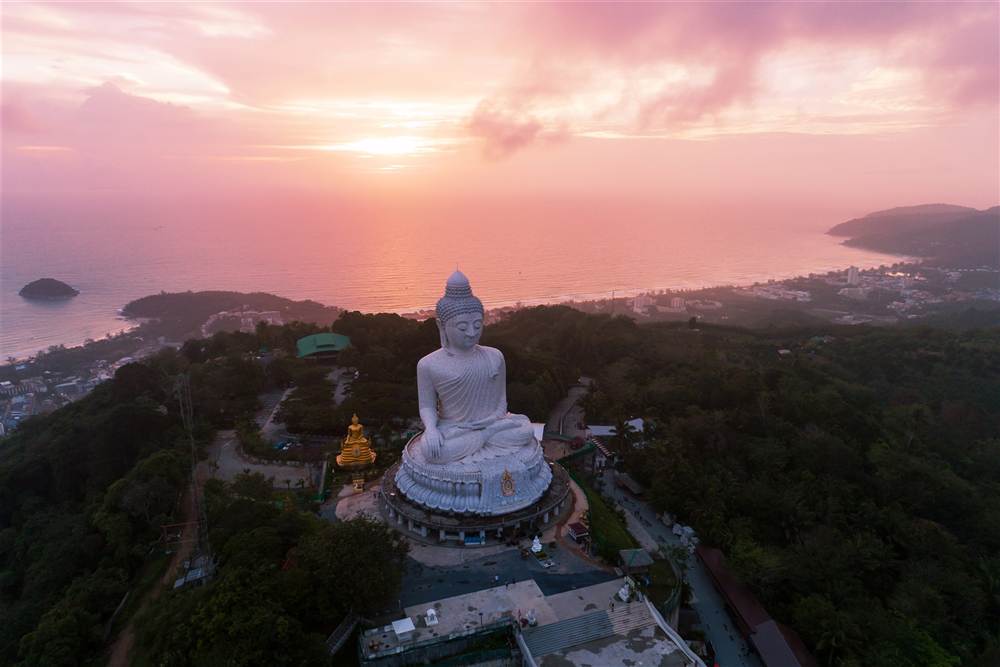
Big Buddha Phuket is both a spiritual landmark and one of Phuket’s most iconic panoramic attractions.
What makes it unique:
- Monumental white marble Buddha statue
- Elevated panoramic location
- Peaceful mountain atmosphere
- Combination of spirituality and scenery
- One of Phuket’s most recognizable landmarks
Beyond tourism, the site continues to function as an active spiritual and meditation area.
Phuket as a Multicultural and Inclusive Island
One of Phuket’s most interesting cultural characteristics is the coexistence of different religions and communities across the island.
Alongside Buddhist temples, visitors can also discover:
- Mosques
- Churches
- Hindu sanctuaries
- Chinese shrines
- International spiritual communities
This diversity reflects Phuket’s history as a trading hub connected to multiple cultures for centuries.
Important Spiritual and Cultural Sites Beyond Buddhism
Masjid Mukarram Bangtao
Masjid Mukarram Bangtao represents Phuket’s Muslim community and highlights the island’s multicultural social structure.
The mosque contributes to the cultural identity of the Bangtao area and reflects the long-established Muslim presence in Phuket.
Masjid Nurul Islam
Masjid Nurul Islam is another important Islamic religious center connected to local communities and daily spiritual life.
All Nations Church Phuket
All Nations Church Phuket reflects Phuket’s international community and the island’s growing multicultural population.
ISKCON Phuket Temple
ISKCON Phuket Temple introduces visitors to Hindu spiritual traditions connected to the international Hare Krishna movement.
Lord Shrimant Ganpati Bappa Devalai
Lord Shrimant Ganpati Bappa Devalai represents another example of Phuket’s diverse spiritual landscape and growing international cultural identity.
Cultural Etiquette When Visiting Temples in Phuket
Visitors exploring temples in Phuket should always respect local traditions.
Important recommendations include:
- Dress modestly
- Remove shoes when requested
- Avoid loud behavior
- Respect prayer areas
- Do not touch sacred objects
- Ask permission before photographing monks
These small gestures help preserve the respectful atmosphere of religious sites.
Why Temples Are Important for Travelers Exploring Phuket
For many visitors, temples become:
- Cultural discovery points
- Photography locations
- Quiet spaces away from tourism crowds
- Historical learning experiences
- Opportunities to better understand Thai culture
Exploring temples also allows travelers to discover local neighborhoods, markets, cafés, and communities beyond Phuket’s beach areas.
What to Check Before Visiting Temples in Phuket
Before visiting temples, consider:
- Opening hours
- Appropriate clothing
- Weather conditions
- Accessibility and parking
- Photography permissions
- Respectful behavior guidelines
Morning and late afternoon are often the best times to visit due to softer temperatures and calmer atmosphere.
Frequently Asked Questions
What is the most famous temple in Phuket?
Wat Chalong is widely regarded as Phuket’s best-known Buddhist temple and is an important place of worship on the island.
Is Big Buddha a temple?
Big Buddha Phuket is a Buddhist landmark associated with religious practice rather than a temple building in the usual sense. Access arrangements can change, so check current official local information before visiting.
Can tourists visit temples in Phuket?
Many temples welcome respectful visitors, although local rules, ceremonies and opening conditions can vary. Follow signs and guidance from the temple on the day of your visit.
What should I wear when visiting temples in Phuket?
Wear modest clothing that covers shoulders and knees, remove shoes where requested and behave quietly in prayer areas.
Does Phuket have places of worship from different religions?
Yes. Phuket’s cultural history includes Buddhist temples, mosques, churches, Hindu sites and Chinese shrines, reflecting the island’s diverse communities.
Conclusion
Phuket’s temples and spiritual landmarks reveal a side of the island often hidden behind its beaches and nightlife reputation. From peaceful Buddhist temples and panoramic hilltop sanctuaries to mosques, churches, and multicultural religious sites, Phuket offers travelers a deeper connection with local traditions, history, and community life.
Guests staying at Metadee Concept Hotel can easily combine luxury hospitality and tropical relaxation with meaningful cultural exploration across some of the island’s most beautiful spiritual and historical locations.
Continue Exploring Phuket
For additional destination context, consult the Tourism Authority of Thailand’s Phuket information.
Continue planning your stay with our guides to East Coast viewpoints and wellness in Phuket.